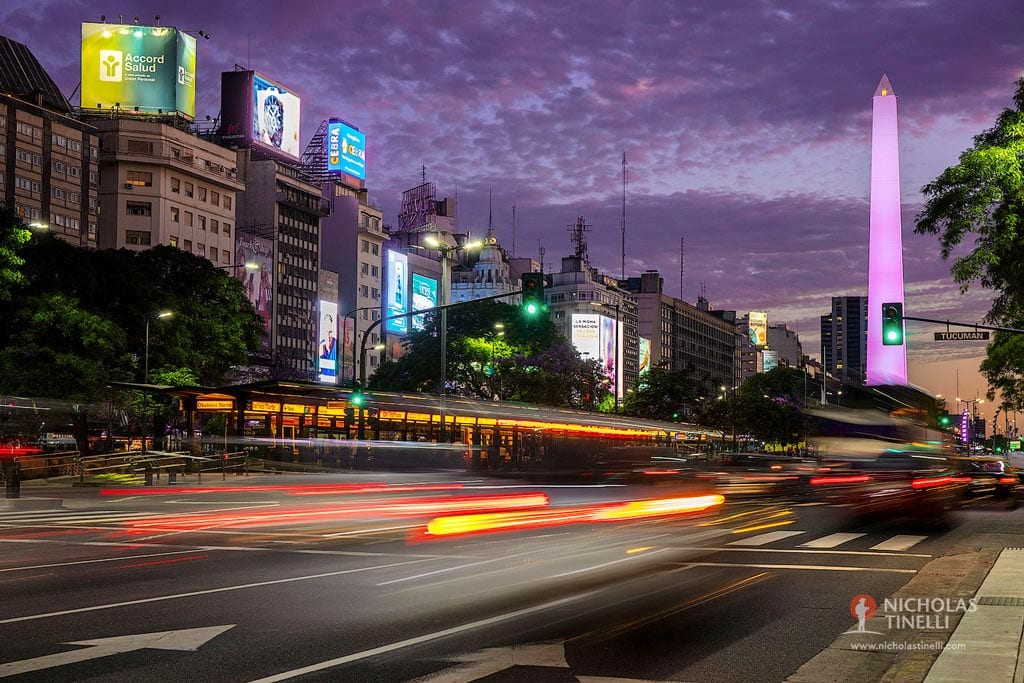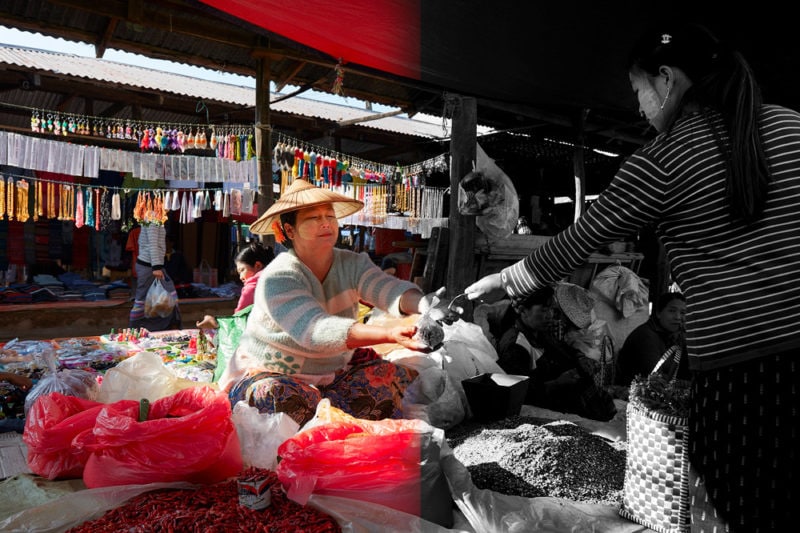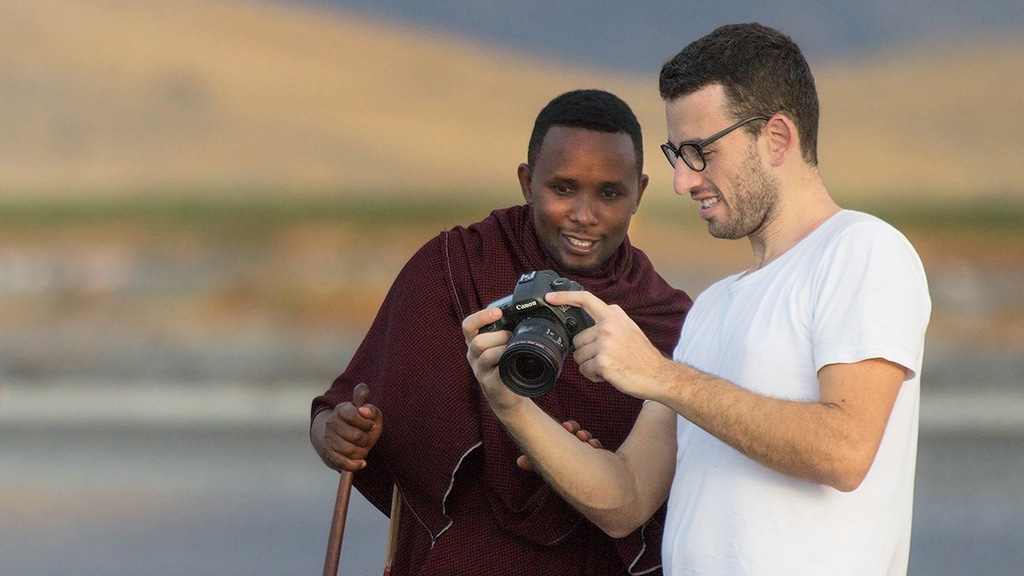
To truly experience the Buenos Aires Street Photography, you have to let yourself be swept up by a city marked by breathtaking visual contrasts. The Argentine capital is a metropolis where European-style architecture blends with vibrant street art and the rhythm of the porteños.
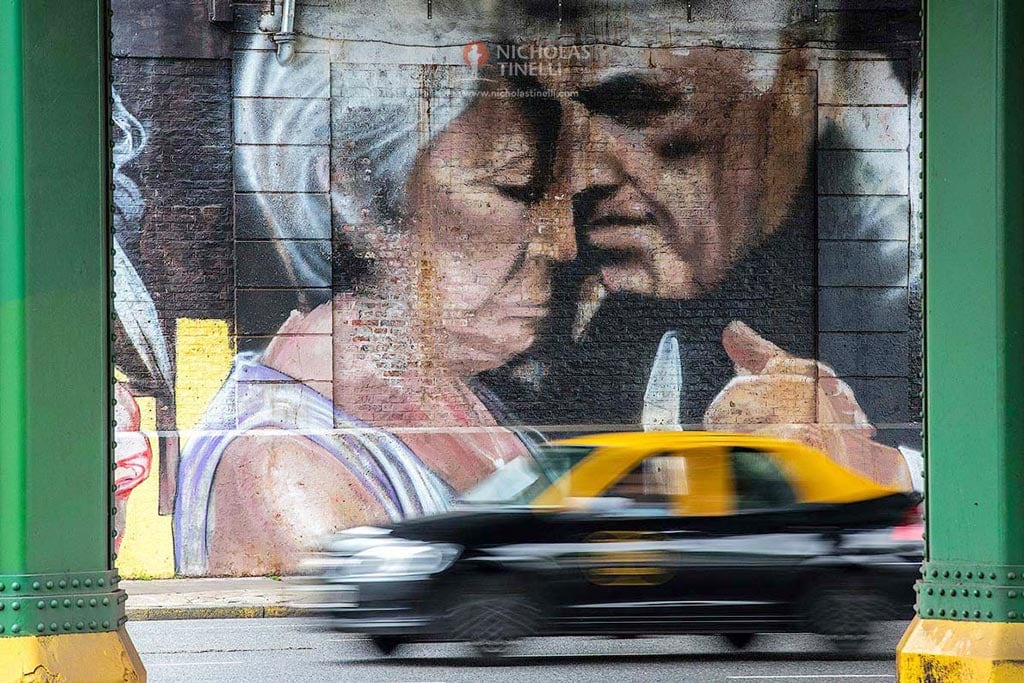
For a Street Photographer, the city is vast, complex, and visually overwhelming—just like a great movie. To elevate your travel portfolio beyond the usual tourist snapshots, you need to approach the streets with the right mindset, the right equipment, and a deep understanding of the local culture.
1. Masters of Street Photography
Before packing your bags, it’s helpful to draw inspiration from the work of some of the great masters. Street Photography, as a genre, was largely defined by the unobtrusive nature and fast shutter speed of the Leica 35 mm rangefinder—a tool that allowed photographers to blend into the crowd.
If you’re looking for inspiration for photographing Buenos Aires, check out the legendary Magnum Photographer Sergio Larrain. His black-and-white photographs, taken throughout South America, perfectly capture that nostalgic, almost ghostly melancholy that still pervades the cobblestone streets of the capital’s old neighborhoods today. If your eye leans toward color, study the complex, multi-layered compositions of Alex Webb. Webb’s mastery of harsh sunlight, deep shadows, and vibrant primary colors offers a perfect blueprint for tackling neighborhoods like La Boca or the bustling Sunday markets.
Keep these masters in mind: Larrain for mood and shadow, Webb for complexity and color.
2. Street Photography Gear: Moving Fast and Staying Light
Although the romantic image of the Street Photographer evokes the idea of a Leica M, a Fujifilm X100, or a camera from the Ricoh GR series, in reality, navigating a bustling city often requires greater versatility. Carrying around too much weight drains your energy, but having the wrong focal length means missing the shot.
The Workhorse Zoom: A versatile 24-70mm lens on a full-frame mirrorless body is generally all you need to cover the vast majority of unpredictable street scenes. It allows you to shoot wide environmental portraits and quickly punch in for tighter details without the friction of changing lenses on a busy corner.
The Fast Prime: Pack a single fast prime, such as a 35mm f/1.4, for late afternoon and twilight. As the sun dips behind the towering architecture, the city’s historic cafes glow with warm artificial light. A fast aperture lets you isolate subjects, maintain fast shutter speeds, and capture that classic, cinematic bokeh.
The Ultra-Wide-Angle Lens: Having an Ultra-Wide-Angle Lens (such as a 14 mm or a 10–15 mm zoom) in your bag is by no means a bad idea; it can help you exaggerate the proportions and perspective of a subject or capture every detail in architectural interiors. You’ll definitely need it to capture the vastness of places like El Ateneo Grand Splendid, considered one of the most beautiful bookstores in the world, or the Teatro Colón, one of the most important opera houses.
3. The Street Photographer's Mindset
As you walk these streets, you will quickly realize that constantly chasing subjects leads to exhausting, chaotic images. To build a cohesive portfolio, you must alternate between two distinct modes of observation:
The Explorer: This approach requires you to be in constant motion, reacting instinctively to the environment. It works best in fast-paced areas like the Microcentro during rush hour. You are actively scanning for interesting characters, rapid interactions, and fleeting gestures, relying on zone focusing and quick reflexes to capture the moment as it unfolds naturally.
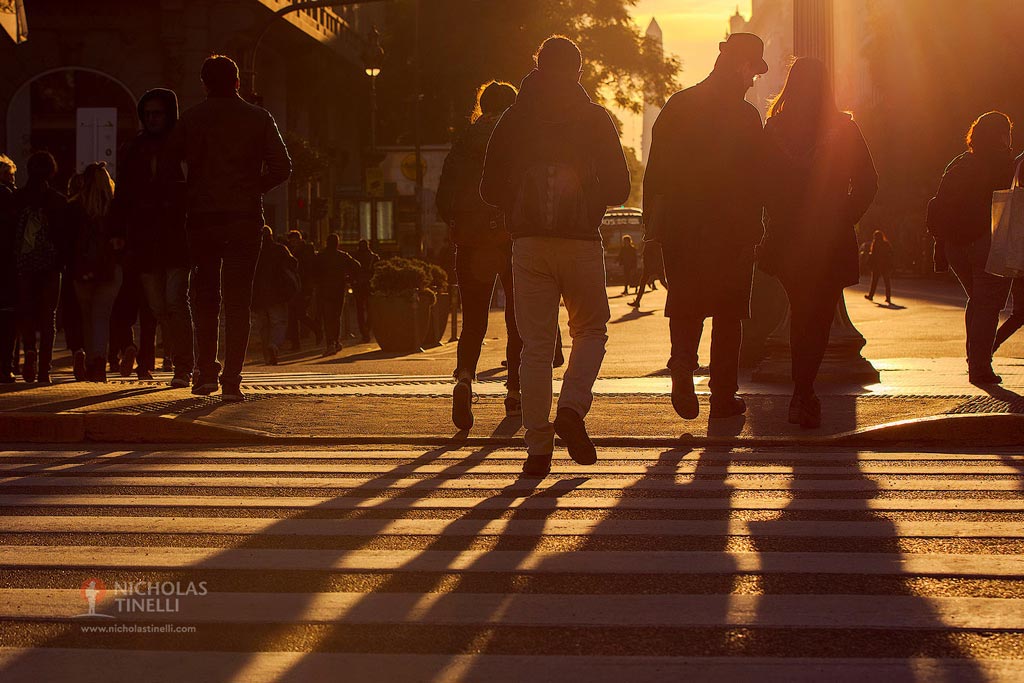
The Stage Setter: This is where patience transforms a good photo into a great one. Instead of seeking out a moving subject, you find the perfect “stage”—a decaying colonial doorway in San Telmo, a shaft of golden light cutting across an intersection, or a vividly painted wall in La Boca. Once you find the stage, you plant your feet, frame your shot, and wait. You simply observe until the perfect protagonist—a man in a classic fedora, a woman with a bright red umbrella—walks directly into your composition.
Challenge yourself: for every hour you spend exploring, spend fifteen minutes setting a stage and waiting. Let Buenos Aires come to you.
4. Top Locations for Street Photography in Buenos Aires
Knowing where to go is only half the equation; knowing when to be there makes the image.
San Telmo: This historic neighborhood offers two completely different photographic experiences. On Sundays, the massive antique market takes over Plaza Dorrego and Defensa street. It is chaotic, crowded, and perfect for capturing tight, candid portraits of local artisans, tango buskers, and the smoke from choripán stands. Conversely, visiting on a quiet Tuesday morning reveals empty, melancholic cobblestones and long shadows stretching across colonial facades—perfect for channeling Sergio Larrain.

- Microcentro & Monserrat: The financial and historic downtown is defined by narrow streets flanked by towering, ornate architecture. At midday, harsh sunlight slices through the gaps between buildings, creating deep, dramatic pools of light and shadow. This is the ideal environment for high-contrast, black-and-white street photography, capturing sharply dressed business people moving rapidly through shafts of light.
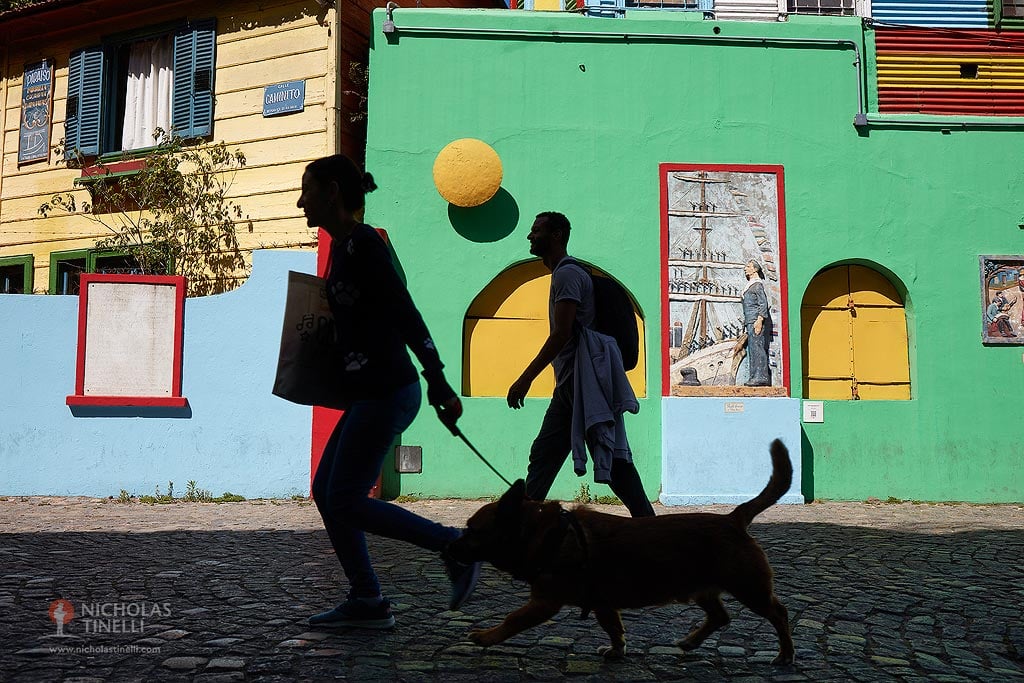
La Boca: Famous for its vividly painted conventillos (tenement houses), La Boca is a paradise for color photographers. To avoid returning with the exact same snapshots as every other tourist, challenge yourself to look over, think with creativity. Focus on the textures of the corrugated iron, the local vendors, and the interplay of primary colors under the harsh afternoon sun.
5. Buenos Aires Street Photography: Capturing the Porteño Character
To shoot Buenos Aires effectively, you must understand the rhythm of its people. The porteño culture is highly expressive, nostalgic, and deeply rooted in ritual.
Notable Bars: The soul of the city lives on in its historic cafés. Take photos through the large windows to capture moments of interaction between people—conversations, exchanges, glances, and expressions. The reflections on the glass can add a beautiful touch of complexity to these shots.

- Street Etiquette: Argentines are generally warm and accustomed to cameras, but mutual respect is paramount. A simple smile and a nod often grant you permission for an environmental portrait. If you prefer pure candids, shooting from the hip with a wider focal length allows you to capture authentic interactions without altering the dynamic of the scene.
6. Exploring the City and Elevating Your Portfolio
While Buenos Aires is a World-Class Destination for Street Photography, its scale and complexity present real logistical hurdles.
It is a major Latin American metropolis, and navigating its streets with expensive camera gear can be risky—especially early in the morning or late at night—without intimate knowledge of the area. Knowing exactly which blocks to avoid, which corners are safe to loiter on, and how to blend in takes years of local experience.
A visiting photographer can easily waste half their trip simply trying to find the right vantage points or constantly worrying about the security of their equipment.
For this reason, it is always highly recommended to explore the city accompanied by a local guide who knows the environment. Booking a dedicated Buenos Aires Photo Tour completely removes the friction and risk of exploration.
Instead of worrying about logistics or missing the fleeting golden hour light, you are guided directly to the most visually compelling locations at the exact right time of day. Having a local professional by your side not only ensures you are shooting in secure, high-yield environments, but also provides on-the-spot technical mentorship to help you capture the true cinematic essence of the city safely.