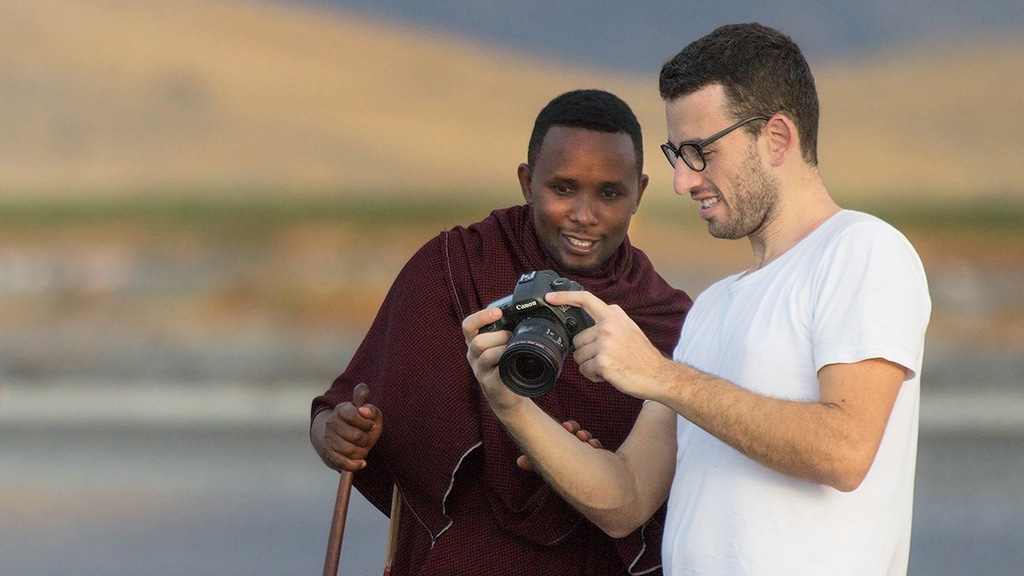
Mastering Buenos Aires Tango Photography means capturing the soul of the city itself. Born in the working-class port neighborhoods in the late 19th century, this dance is far more than a sequence of steps.
It is a language of melancholy, passion, and profound connection, deeply intertwined with the worn cobblestones and historic elegance of the Argentine capital.
For a Travel or Portrait Photographer, capturing this dance is one of the most rewarding yet challenging technical endeavors. This guide will walk you through the emotional, compositional, and technical strategies required to master the art form, elevating your portfolio beyond standard tourist snapshots.
The Soul of Buenos Aires Tango Photography
Before discussing shutter speeds or focal lengths, you must understand what you are actually capturing. The essence of this dance does not lie in the flashy footwork; it lies in the connection.
The Embrace (El Abrazo): This is the anchor of the dance. Focus your lens on the physical connection—the micro-expressions, the closed eyes, the tilt of a cheek against a cheek, and the tension in the hands. The tightest embraces often yield the most powerful portraits.
The Atmosphere of the Birthplace: The city is a character in your frame, not just a backdrop. Use the environment to tell a broader story about the culture, letting the historic architecture frame your subjects.
- The Observer’s Empathy: To photograph the dance well, you have to feel the music (la música) and anticipate the pause (la pausa). The best images come from recognizing the emotional peak of a musical phrase.
Tango Photography Guide: Anticipating Poses and Lines
Understanding the mechanics of the dance allows you to anticipate the shot rather than chase it, ensuring you are ready when the geometry of the couple aligns perfectly.
Reading the Movement: Familiarize yourself with classic figures. Anticipate the sweeping arc of a boleo (the dramatic flick of the leg) or the intricate footwork of an ocho (figure eight).
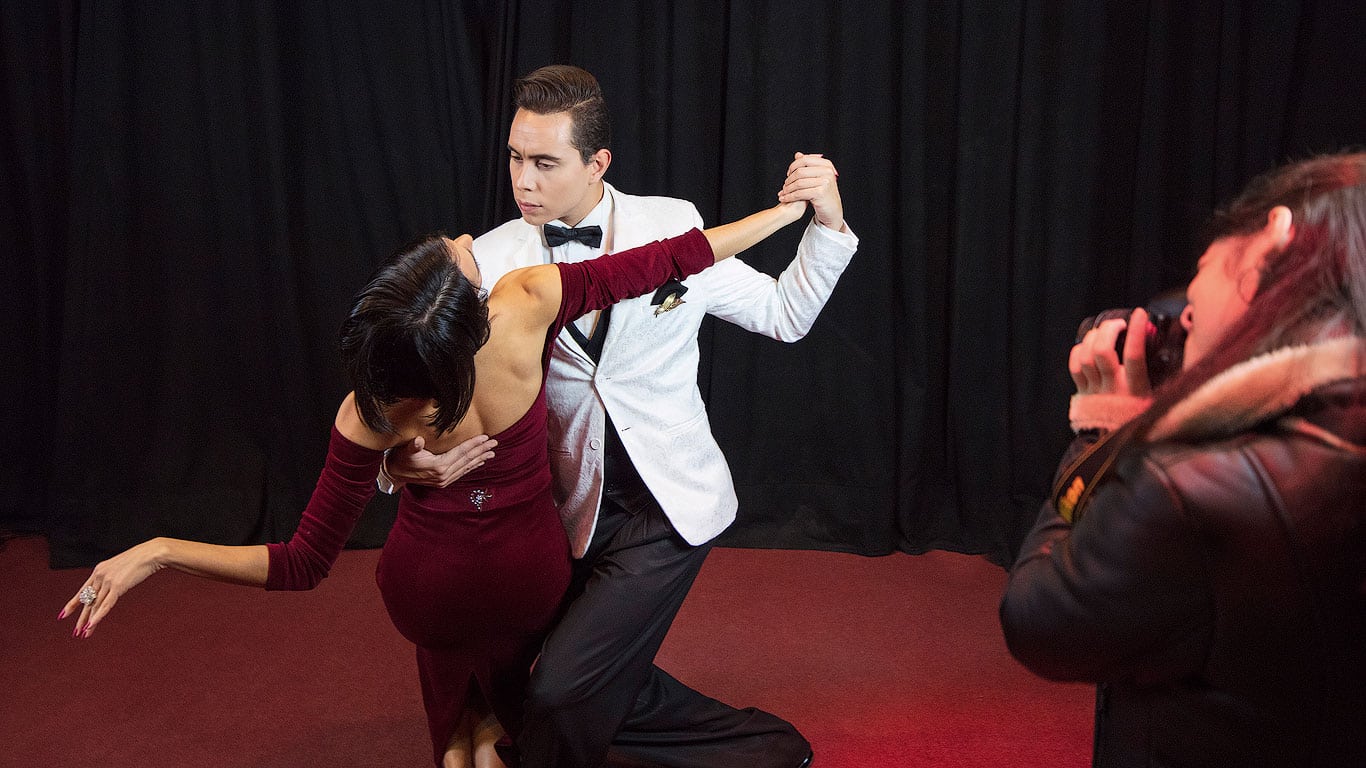
Finding the Apex: The secret to sharp, dramatic dance photography is pressing the shutter at the absolute peak of an extension or the deepest moment of a dip. At this apex, the movement naturally pauses for a fraction of a second, giving you a window for optimal sharpness.
Composition and Angles: Perspective changes everything. Shooting from a low angle emphasizes the dramatic lines of the dancers’ legs. Conversely, shooting tight and at eye level isolates the intimacy of the upper body.
Where to Photograph Tango in Buenos Aires
Tango is an ecosystem, and each environment demands a completely different photographic mindset.
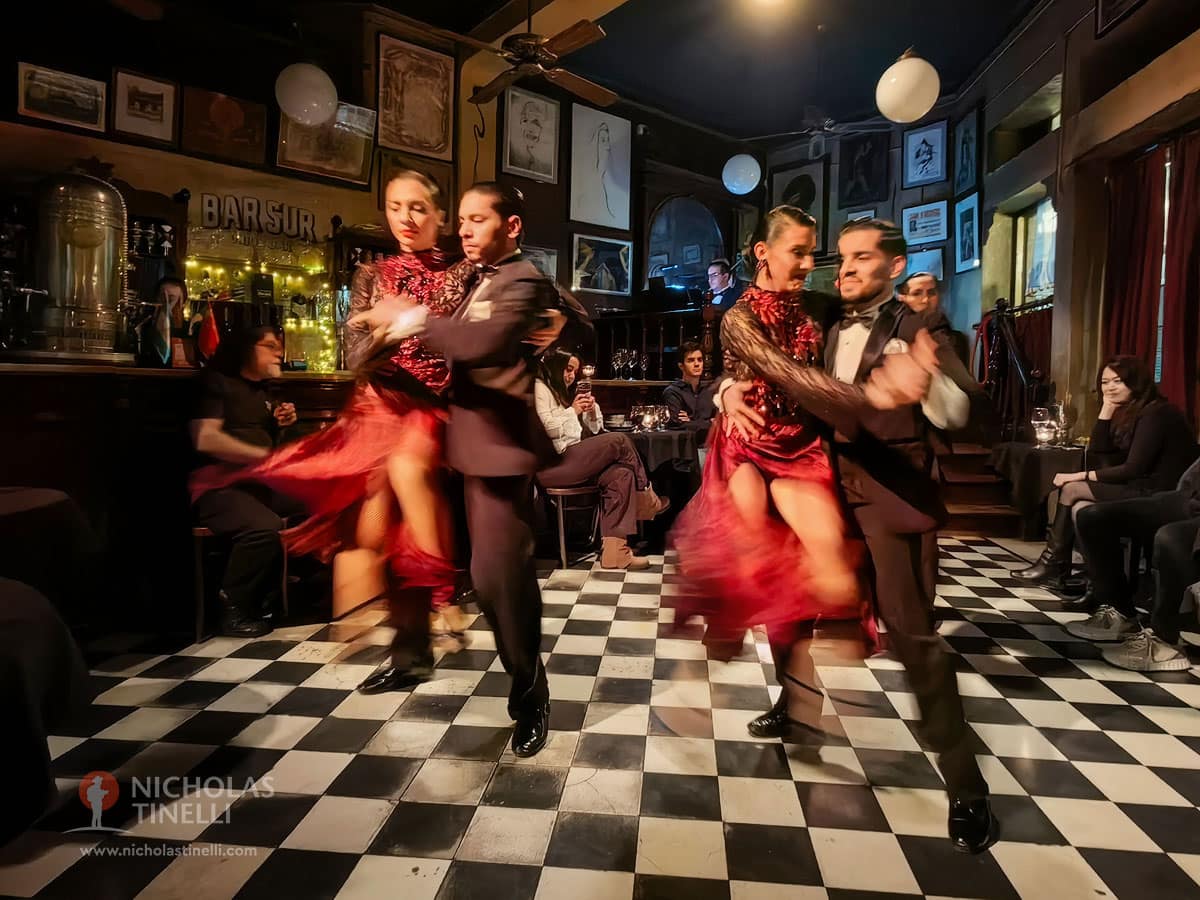
Buenos Aires Milonga Photography: The traditional dance halls are intimate, notoriously dark, and bound by strict social codes. The focus here is on the mood, the embrace, and the cabeceo (the subtle nod of invitation).
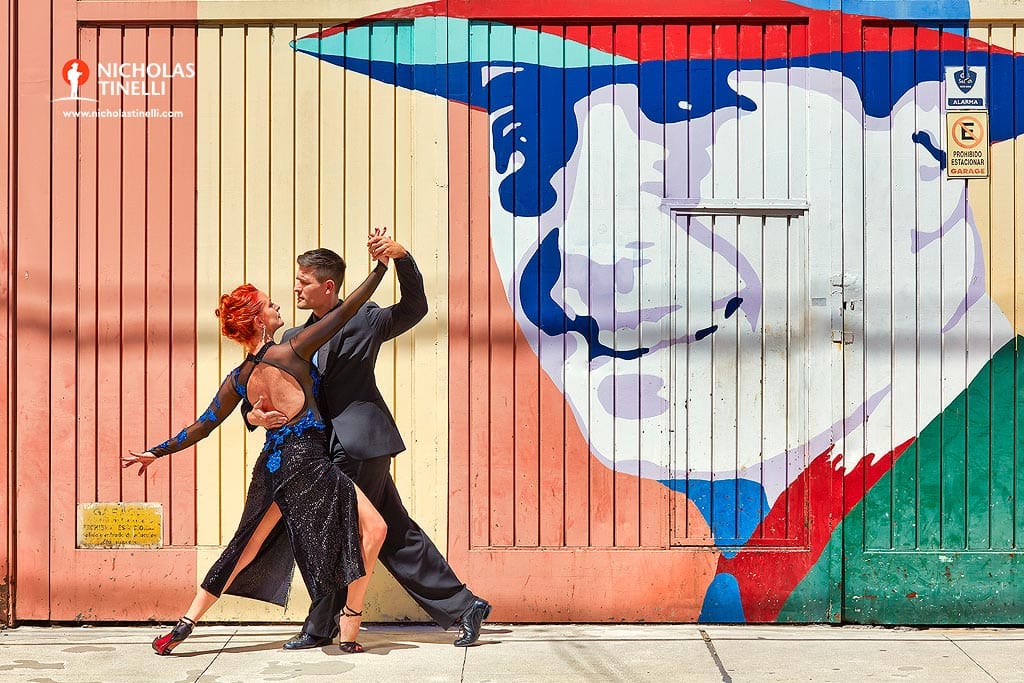
Buenos Aires Street Tango: Whether you are doing San Telmo street photography or shooting in La Boca, you are battling dynamic natural light and crowds. The challenge is isolating the subjects from modern distractions to preserve a cinematic feel.
- Tango Staged Shows: High-speed, acrobatic, and dramatic. This environment requires capturing peak action under harsh, high-contrast theatrical spotlights.
Tango Private Session (either in studio or exterior): A controlled environment where you direct the scene. This is the ideal arena for executing specific creative visions on request.
Tango Photography Low Light Exposure Settings
Every arena presents a unique lighting challenge. When shooting indoors or at night, your exposure strategy must be an intentional artistic choice.
Freezing or Showing a Movement: In the milonga or during a show, you have two choices: freeze the motion or embrace the blur. To freeze action, you need a minimum of 1/250s, which requires pushing your ISO to 6400 or higher and shooting wide open (f/1.4 or f/1.8). Alternatively, dropping your shutter speed to 1/30s or 1/15s allows you to blur a swinging leg while keeping the core of the couple relatively sharp.
Metering for High-Contrast Stage Shows: Standard matrix metering often fails under heavy theatrical spotlights, resulting in blown-out highlights on the dancers’ skin. Switch to spot metering, exposing specifically for the dancers’ faces.
Photographing Tango Street Performances
Tango Photography in Buenos Aires with daylight, presents a number of challenges: from capturing the light to managing distractions.
Compression is Key: Use longer focal lengths, such as an 85mm or a 70-200mm, shooting at wide apertures like f/2.8. This compresses the background and throws distracting crowds out of focus.
Watch the Backgrounds: Position yourself so the dancers are framed by classic elements of the city, such as the colorful conventillos of La Boca or the historic facades of San Telmo. Avoid placing bright, modern distractions like traffic signs or neon storefronts directly behind the couple’s heads.
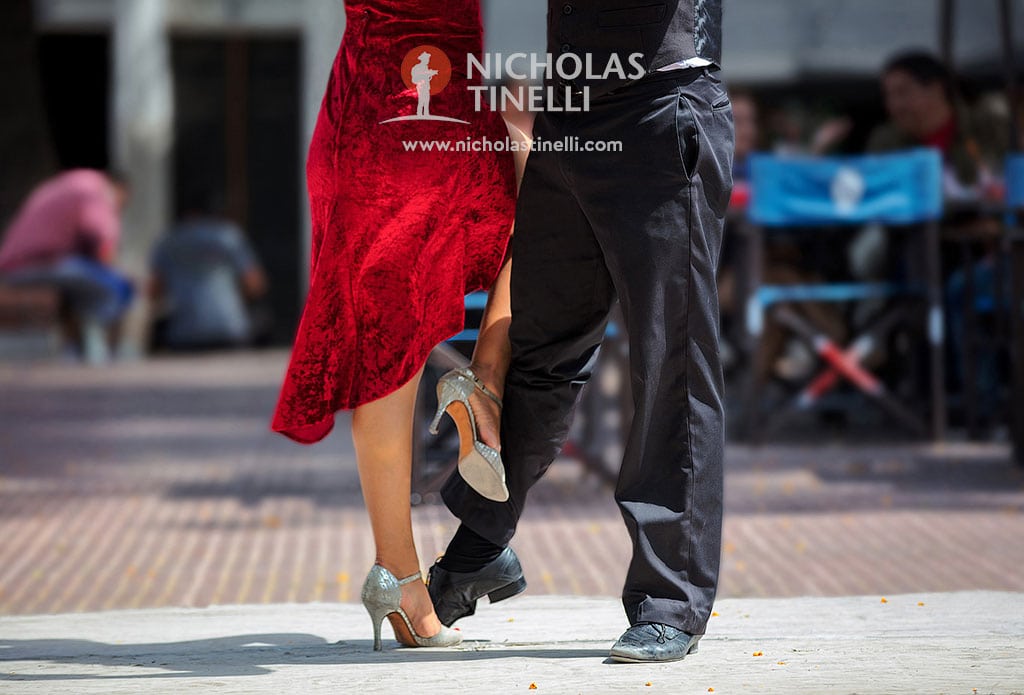
- Managing the Sun: Midday sun creates harsh shadows that destroy the subtleties of the embrace. If shooting a street performance at noon, expose for the highlights to protect the skin tones, and rely on shadows to add drama, or position yourself to use backlighting with the sun behind the couple.
Elevate Your Portfolio: Tango Photography Workshops
Shooting live events is thrilling, but it comes with immense limitations. As a photographer, you are entirely at the mercy of unpredictable lighting, cluttered backgrounds, and the inability to ask a dancer to repeat a breathtaking movement.
For those looking to craft a truly professional portfolio, nothing beats a directed session. Working One-On-One with Professional Dancers allows you to take control of the narrative. You can introduce portable off-camera flash to perfectly balance ambient city light with dramatic subject lighting, refining poses until the geometry and emotion are flawless.
If you are traveling to Argentina and want to bypass the frustrations of live-event shooting, booking specialized Buenos Aires Photography Workshops or Argentina Tango Photo Tours is the ultimate solution.
By arranging the professional dancers, securing iconic locations—like an empty cobblestone street at dawn—and handling the complex lighting setups, the logistical hurdles are removed, allowing you to focus entirely on capturing the authentic soul of the dance.